
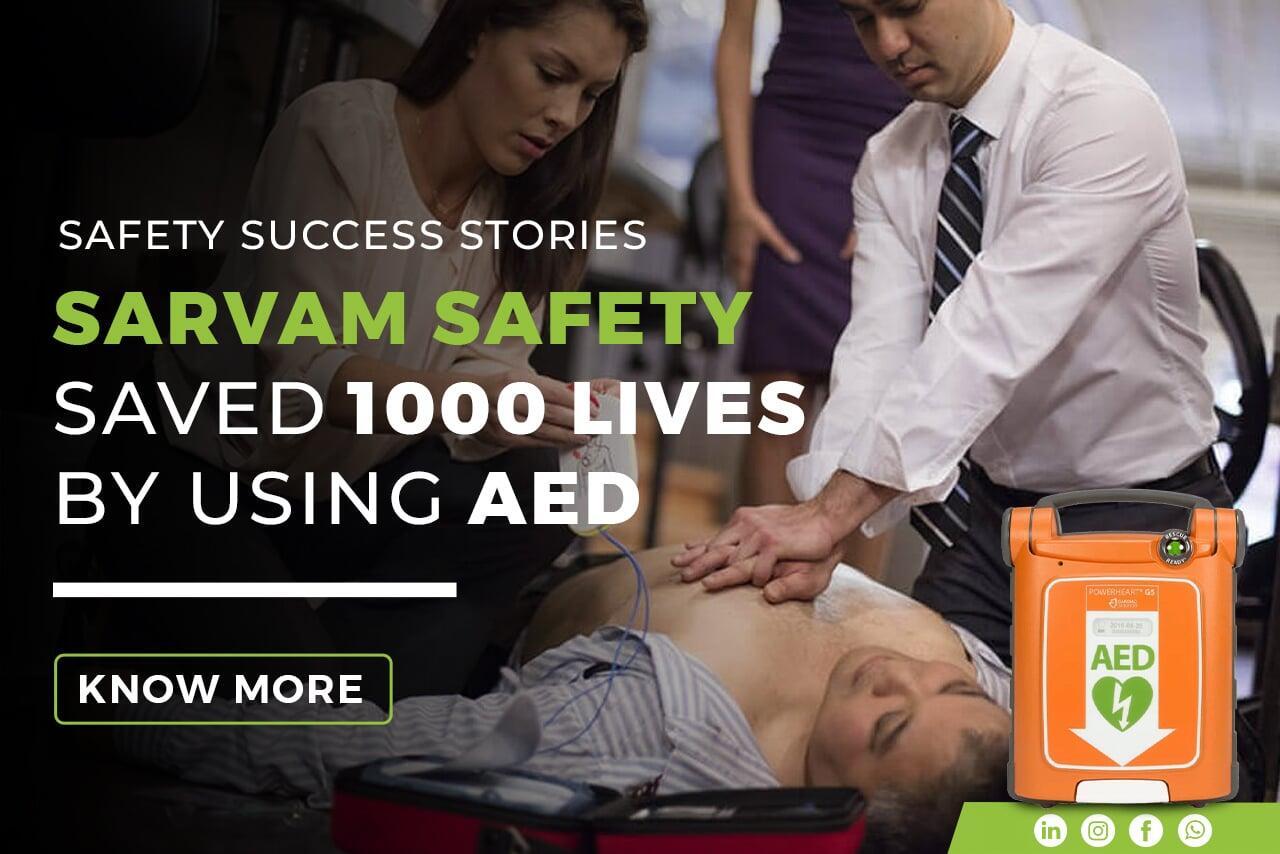
Sudden cardiac arrest can strike without warning, but immediate action using CPR and an AED can significantly improve survival chances. Awareness and preparedness save lives.
Safety Success Stories: How AEDs HelpSave Lives in Critical Moments
Sudden cardiac arrest is one of the leading causes of unexpected death worldwide, often occurring without prior warning. In India, the number of such incidents has been steadily rising, especially among working professionals and individuals under stress. The first few minutes after collapse are critical, as survival chances drop rapidly without immediate intervention. This is where awareness, preparedness, and access to the right equipment become essential. Cardiopulmonary resuscitation (CPR) and Automated External Defibrillators (AEDs) play a vital role in improving survival outcomes during such emergencies.
Timely response using CPR and AEDs can significantly increase the chances of survival by maintaining blood circulation and restoring normal heart rhythm. While emergency medical services are crucial, bystander intervention often determines the outcome in real-world situations. Organizations like Sarvam Safety are actively working to bridge this gap by promoting awareness and ensuring accessibility to life-saving equipment. Building safer workplaces and public environments begins with understanding how to respond effectively when every second counts.
Every minute without CPR or AED intervention reduces survival chances drastically. Immediate response is critical.
What is an AED?
An Automated External Defibrillator (AED) is a portable, easy-to-use medical device designed to treat sudden cardiac arrest by restoring a normal heart rhythm. It works by analyzing the heart’s electrical activity and delivering a controlled electric shock when necessary. AEDs are specifically designed for use by non-medical individuals, making them highly effective in public and workplace settings. Most devices come with voice prompts and visual instructions that guide users step by step during an emergency.
AEDs are commonly installed in high-traffic areas such as offices, airports, malls, and industrial workplaces. Their accessibility plays a crucial role in emergency preparedness, as immediate defibrillation significantly improves survival rates. Unlike complex medical equipment, AEDs are built for simplicity, allowing anyone to act quickly and confidently. When used alongside CPR, they form a powerful combination that can save lives during the most critical moments of cardiac emergencies.
How to Treat a Sudden Cardiac Arrest
Treating sudden cardiac arrest requires immediate and decisive action. The first step is to recognize the signs, which include sudden collapse, unresponsiveness, and absence of normal breathing. Once identified, emergency services must be contacted without delay. While waiting for professional help, initiating CPR helps maintain blood flow to vital organs, particularly the brain. Every second matters, and early action can prevent irreversible damage.
An AED should be used as soon as it becomes available. It analyzes the heart rhythm and determines whether a shock is required to restore normal function. Combining CPR with AED use significantly increases survival chances. These steps are based on standard emergency response guidelines and are designed to be performed even by individuals without medical training. Quick response, proper technique, and access to equipment together form the foundation of effective life-saving intervention.
CPR maintains blood flow. AED restores heart rhythm. Together, they create the strongest chance of survival.
How to Perform CPR (Step by Step)
How to Perform CPR (Step by Step)
Step 1: Check Responsiveness and Breathing
Ensure the person is unresponsive and not breathing normally.
Step 2: Call for Emergency Help
Dial emergency services immediately or ask someone nearby to do so.
Step 3: Position the Person
Lay the person flat on a firm surface and kneel beside them.
Step 4: Hand Placement
Place the heel of one hand at the center of the chest and the other hand on top, interlocking fingers.
Step 5: Start Chest Compressions
Push hard and fast, at least 2 inches deep, using your upper body weight.
Step 6: Maintain Rhythm
Perform compressions at 100–120 per minute.
Step 7: Allow Full Recoil
Let the chest return to normal after each compression.
Step 8: Continue Until Help or AED Arrives
Do not stop CPR unless the person shows signs of recovery or medical help takes over.
How to Use an Automated External Defibrillator (AED)?
How to Use an Automated External Defibrillator (AED)?
An AED is designed to be simple and safe, even for first-time users. Once the device is turned on, it provides clear voice instructions to guide the user through each step. The device analyzes the heart rhythm and determines whether a shock is required, removing the need for manual judgment. This makes AEDs highly reliable in emergency situations where quick decisions are critical.
It is important to ensure that the person’s chest is exposed and dry before attaching the electrode pads. The AED will automatically guide the user through analysis and shock delivery if needed. During this process, no one should be in contact with the patient. When used correctly and promptly, AEDs significantly improve survival outcomes and are a key component of modern emergency response systems.
How to Use an AED (Step by Step)
How to Use an AED (Step by Step)
Step 1: Turn on the AED
Switch on the device and follow the voice instructions.
Step 2: Expose the Chest
Remove clothing and ensure the chest is dry.
Step 3: Attach the Pads
Place the electrode pads as shown on the device (upper right chest and lower left side).
Step 4: Analyze Heart Rhythm
Ensure no one is touching the person while the AED analyzes.
Step 5: Deliver Shock if Advised
Clear the area and press the shock button if prompted.
Step 6: Resume CPR Immediately
Continue CPR after the shock or if no shock is advised.
Step 7: Continue Until Help Arrives
Follow AED prompts until emergency services take over.
Conclusion
Conclusion
Workplace and public safety depend heavily on preparedness and the ability to respond effectively during emergencies. Sudden cardiac arrest can occur without warning, but the right knowledge and equipment can make a critical difference. AEDs and CPR together form a life-saving response system that empowers individuals to act confidently in high-pressure situations.
Sarvam Safety continues to play an important role in strengthening this ecosystem by supplying AEDs, promoting awareness, and enabling organizations to build safer environments. Their contribution goes beyond products, focusing on real-world impact and preparedness. Investing in safety is not just about compliance; it is about protecting lives. With the right approach, more lives can be saved and more workplaces can become truly secure.

